Call Us Today!
(905) 689-7474

Our Office
Visit Us Online


If a dental professional recommends root canal treatment for a tooth, there’s no reason to panic. Modern root canal therapy focuses on removing inflamed or infected tissue from inside the tooth while preserving the structure and function of the natural tooth. For many patients, this treatment relieves severe pain, prevents the spread of infection, and keeps the smile intact without the need for extraction.
At the office of City Smiles Dental, our approach combines careful diagnosis with gentle technique and proven materials. We prioritize patient comfort and clear communication so you understand each step of the process and feel confident in the care you receive.
The human tooth is engineered to last a lifetime, and when the inner tissues become damaged, root canal therapy is often the most reliable way to restore its health. By removing diseased pulp and sealing the canals, the tooth can remain functional for years with appropriate restoration and maintenance. Choosing to save a tooth preserves chewing efficiency, maintains adjacent tooth positions, and helps keep the jawbone healthy.
Root canal success rates are high when treatment is performed promptly and the tooth is restored properly afterward. Modern techniques and materials have reduced complications and improved long-term outcomes compared with older approaches. For most patients, a treated tooth can provide durable function and contribute to overall oral health for many years.
Deciding between extraction and root canal therapy depends on factors such as remaining tooth structure, bone support, and the tooth’s role in the bite. Your dentist will review these considerations and recommend the option that best maintains your oral health while minimizing future interventions.

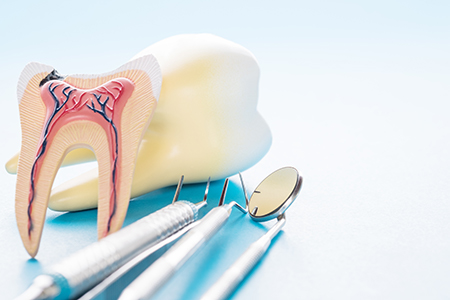
Each tooth contains a central chamber filled with pulp — nerves, blood vessels, and connective tissue — that supports development and senses pressure and temperature. When decay, trauma, or repeated dental work allows bacteria to reach this tissue, inflammation or infection can set in. Left untreated, that infection can spread beyond the tooth and harm the surrounding bone and soft tissues.
Symptoms that often indicate pulp involvement include persistent or worsening pain, heightened sensitivity to hot or cold, and discomfort when chewing. Sometimes a tooth darkens over time after an injury, or a small bump (an abscess) may appear on the gum near the affected root. However, not all infected teeth show obvious symptoms; some are identified only through careful examination and x-rays during routine dental visits.
When a diagnosis points to irreversible pulp damage, root canal therapy removes the diseased tissue, disinfects the internal canals, and fills the space with a biocompatible material. Preserving the natural tooth in this way often avoids the need for more complex replacements that can affect surrounding teeth and oral function.
A successful outcome also depends on timely action. Early diagnosis and treatment reduce the chance of extensive infection, bone loss, or the need for surgical intervention. Your dentist will evaluate the tooth’s structure and root anatomy to determine whether non-surgical root canal therapy is the appropriate course of care.
Persistent or throbbing pain that does not respond to over-the-counter remedies and interferes with sleep often signals deep-seated inflammation or infection of the pulp.
Discomfort that lingers after exposure to hot or cold foods and beverages can reflect nerve irritation within the tooth and warrants professional evaluation.
If chewing or light tapping causes pain, the internal structures may be compromised and the tooth could benefit from root canal treatment.
A tooth that becomes discolored after trauma or over time can indicate that the internal tissues are no longer healthy.
Structural damage can expose or injure the pulp. When enough healthy structure remains, a root canal often preserves the tooth and prepares it for a protective restoration.
Localized swelling, tenderness, or an area that drains pus are signs of infection that require prompt attention to prevent further complications.
An infection that reaches supporting bone can reduce stability. Treating the source of infection and allowing healing can often restore support.

Addressing pulpal disease early improves the likelihood of saving the tooth and reduces the risk of complications that can affect nearby teeth and jawbone. Rapid intervention often means less extensive treatment overall and a quicker return to normal comfort and function. Regular dental exams and x-rays help identify problems before they escalate.
Delaying care can allow an infection to advance, increasing the chance of swelling, spreading infection, and damage to surrounding structures. In some cases, late-stage infections require additional procedures such as root-end surgery or extraction followed by replacement options, which are more invasive than primary root canal therapy.
Your dentist will explain the findings, discuss timing, and outline the next steps if root canal therapy is recommended. When treatment begins promptly, healing and restoration are more predictable, and long-term success rates improve.
Contemporary root canal therapy uses refined instruments, high-quality filling materials, and magnification to clean and shape the canal system effectively. Procedures are performed under local anesthesia to ensure comfort, and many offices offer sedation options for patients who prefer a calmer experience.
The basic sequence includes accessing the pulp chamber, removing inflamed or infected tissue, cleaning and disinfecting the canals, and filling them with a stable, biocompatible material. In many cases, a temporary restoration is placed, and a permanent crown or onlay is recommended later to protect the tooth from fracture and restore its full function.
The number of visits varies by case. Some teeth can be treated in a single appointment, while others may need additional visits due to infection, complex anatomy, or care coordination for the final restoration. Throughout treatment, your provider will monitor healing and help plan the most durable long-term solution for the tooth.
After root canal therapy, most patients experience gradual improvement in symptoms. Some tenderness around the tooth or gums is normal for a few days as tissues heal. Over-the-counter pain relievers and following the care directions provided by your dentist are usually sufficient to manage any short-term discomfort.
It’s important to avoid heavy chewing on the treated tooth until it receives its permanent restoration. A temporary filling protects the tooth during healing, but the structure can still be vulnerable to fracture. Restoring the tooth with a crown, onlay, or appropriate restoration helps distribute forces and preserves function.
Good oral hygiene and regular dental check-ups support the long-term success of a treated tooth. If symptoms such as renewed pain, swelling, or persistent sensitivity occur after treatment, contact the office promptly so the situation can be assessed and managed without delay.
Anesthesia used during the procedure can leave lips and tongue numb for a short time. Take care to avoid biting or burning tissues until sensation returns fully.
Mild to moderate soreness is common for a few days after treatment. This typically diminishes with time and appropriate self-care.
If antibiotics or other medications are prescribed, follow the instructions and complete the course to support healing.
Limit chewing on the treated side and avoid hard or sticky foods until a permanent crown or restoration is placed.
Continue regular brushing and flossing to support healing and prevent new decay around the restored tooth.
Completing the recommended permanent restoration promptly reduces the risk of fracture and helps ensure the longevity of the tooth.
With careful treatment and follow-up, a tooth treated with root canal therapy can function comfortably for many years. The practice at City Smiles Dental is committed to clear communication, modern techniques, and patient comfort to help you achieve the best possible outcome.
If you have questions about root canal therapy or want to discuss treatment options, please contact our office for more information.

A root canal is a dental procedure that treats infection or inflammation inside the tooth's pulp. The goal is to remove diseased tissue, disinfect the canal system, and preserve the natural tooth structure. By addressing the source of pain and infection, the procedure helps restore oral function and prevent spread to surrounding tissues.
Modern root canal therapy uses refined instruments and biocompatible materials to clean, shape, and fill the canals. Treatment is performed under local anesthesia to ensure comfort, and sedation options are often available for anxious patients. At the office of City Smiles Dental, the team emphasizes clear communication and gentle technique throughout the process.
Common signs that a tooth may need root canal therapy include persistent toothache, prolonged sensitivity to hot or cold, and pain with biting or pressure. Other indicators are darkening of the tooth, swelling or a pimple-like bump on the gum, and loosening of the affected tooth. However, some infected teeth produce minimal or no symptoms and are detected only on x-rays during routine exams.
A thorough dental exam with radiographs and clinical testing helps determine whether the pulp is irreversibly damaged. Your dentist will assess tooth structure, root anatomy, and surrounding bone before recommending treatment. Early evaluation improves the chances of saving the tooth and limits the need for more invasive procedures.
Root canal treatment begins with numbing the area and isolating the tooth to keep it clean and dry. The dentist then creates an access opening, removes inflamed or infected pulp tissue, and carefully shapes and disinfects the canal system. This step reduces bacterial load and prepares the canals for a stable sealing material.
After filling the cleaned canals with a biocompatible material, a temporary restoration is often placed to protect the tooth during healing. Many cases conclude with a permanent crown or onlay to restore strength and function. The number of visits varies depending on infection severity and anatomy, with some teeth treated in a single appointment and others requiring additional care.
Most patients experience little or no pain during a root canal because local anesthesia numbs the tooth and surrounding tissues. Modern instruments and techniques further reduce discomfort, and sedation is available for those with dental anxiety. If you have concerns about pain control, discuss options with your provider before the procedure.
Some tenderness or mild soreness after treatment is normal for a few days as the tissues heal. Over-the-counter pain relievers and following post-operative instructions typically manage this discomfort effectively. Contact your dentist if severe or worsening pain, swelling, or fever develop after treatment.
Before your appointment, follow any instructions your dental team provides, such as fasting if intravenous sedation is planned or arranging transportation when sedation is used. Bring a list of current medications and any medical history changes so the dentist can evaluate potential interactions and tailor care. Wearing comfortable clothing and arriving a few minutes early helps reduce stress on the day of treatment.
If you are a patient at the Waterdown, Ontario office, let the team know about allergies, recent illnesses, or pregnancy to ensure safe care. Plan to avoid heavy chewing on the treated tooth until it receives its final restoration, and arrange follow-up appointments as recommended. Clear communication with your provider helps make the appointment efficient and comfortable.
Root canal therapy is a well-established procedure, but like any treatment it carries some risks such as persistent infection, instrument separation, or incomplete canal cleaning due to complex anatomy. Rarely, retreatment, endodontic surgery, or extraction may be necessary if the tooth does not respond as expected. Your dentist will review these possibilities and explain the steps taken to minimize complications.
Factors that can increase risk include long-standing infection, calcified canals, or previously restored teeth with limited remaining structure. Timely diagnosis and skilled technique improve outcomes, and modern materials and magnification tools help address challenging cases. Good oral hygiene and prompt restoration placement also support long-term success.
Most patients return to normal activities the day after treatment, with gradual reduction of soreness over several days. Mild discomfort or sensitivity around the treated tooth and surrounding gums is common and typically resolves with conservative measures. Significant pain, swelling, or systemic symptoms should prompt immediate contact with the dental office.
Complete healing of bone and tissues can take several months, but the functional restoration is usually achieved once the permanent crown or restoration is in place. Regular follow-up visits and x-rays allow the dentist to monitor healing and confirm long-term success. Maintaining routine dental care and avoiding hard or chewy foods until the permanent restoration is placed helps prevent complications.
A root canal-treated tooth is protected long term by placing an appropriate restoration, most often a crown or onlay, to restore strength and prevent fracture. Restorative materials are selected to match function and aesthetics while preserving remaining tooth structure. Timely permanent restoration is a key factor in achieving durable results.
Routine dental exams and good oral hygiene reduce the risk of recurrent decay that can compromise a treated tooth. If a treated tooth does develop new symptoms, prompt evaluation allows early management, which may include retreatment or surgical options. At City Smiles Dental, coordinated endodontic and restorative care helps ensure that treatment steps work together for a lasting outcome.
When a tooth is too damaged to predictably save, alternatives to root canal therapy include extraction followed by replacement options such as dental implants, bridges, or removable prostheses. Each option has different implications for adjacent teeth, bone preservation, and long-term function. Your dentist will discuss which approach best meets your oral health needs and treatment goals.
Choosing extraction over root canal therapy often depends on remaining tooth structure, overall oral health, and patient-specific factors. Preserving the natural tooth is generally preferred when feasible, because it maintains chewing efficiency and helps protect the surrounding teeth and jawbone. A thorough clinical evaluation and discussion of risks and benefits will guide a shared decision.
Seek prompt dental care if you experience severe toothache that interferes with sleep, sudden swelling of the face or neck, or signs of spreading infection such as fever and general malaise. These symptoms can indicate an advanced infection that requires immediate attention to prevent systemic complications. Delaying care increases the risk of more invasive treatment or hospitalization in rare cases.
If you notice a persistent gum boil (sinus tract), uncontrolled bleeding, or a tooth that becomes increasingly loose, contact your dentist right away for evaluation and possible treatment. Emergency management may include pain control, antibiotics when appropriate, and expedited root canal therapy or extraction to address the source. Timely intervention improves outcomes and reduces the risk of additional problems.