Call or Text Us Today!
(905) 689-7474

Our Office
Visit Us Online


Tooth loss can affect anyone at any stage of life, and the decision to replace missing teeth is as much about long-term health as it is about appearance. Advances in restorative dentistry have made it possible to rebuild smiles that look, feel, and function like natural teeth. At City Smiles Dental we focus on treatments that restore chewing ability, preserve facial structure, and reduce the risk of further dental problems.
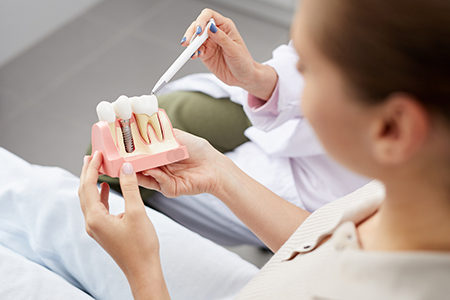
Dental implants are engineered to replace both the visible crown and the hidden root of a missing tooth. Because they integrate with the jawbone, implants provide stable support for crowns, bridges, or dentures without relying on neighboring teeth. That stability translates into clear speech, comfortable chewing, and a natural appearance that blends with the rest of the smile.
Beyond immediate function, implants help protect the long-term health of your mouth. By replacing the tooth root, implants preserve bone volume and help maintain the natural contours of the face. That bone-preserving property reduces the gradual changes that can occur when teeth are left unreplaced.
At their core, dental implants are small, biocompatible posts—most commonly made from titanium or titanium alloys—that are placed into the jaw to act as artificial tooth roots. Once an implant is placed, the surrounding bone gradually bonds to the implant in a process called osseointegration. That fusion creates a strong and durable foundation for prosthetic teeth.
On top of the integrated implant, a variety of restorations can be attached depending on need: a single crown for one missing tooth, a bridge for several teeth, or a denture for a full arch. The prosthetic portion is designed to match your natural teeth in color, shape, and size so the final result looks cohesive and balanced.
Like any restorative option, implants require careful planning. Diagnostic imaging and a thorough clinical exam help determine the ideal implant position and identify whether additional procedures—such as bone grafting—are needed to create a predictable outcome.
Dental implants are often chosen because they closely mimic the look and performance of natural teeth. They restore biting force, allow a full range of foods, and minimize the movement that can occur with removable prostheses. Many patients notice an immediate improvement in comfort and confidence once implants are integrated and restored.
Implants also offer long-term benefits for oral health. Because they support the jawbone, implants prevent the bone loss that typically follows tooth extraction. Preserving bone helps maintain facial proportions and reduces the risk of shifting adjacent teeth, which can create bite problems over time.
Durability is another advantage. With appropriate oral hygiene and regular dental visits, implants can provide many years of reliable service. They are not susceptible to decay like natural teeth, and their performance makes them a versatile option for a wide range of restorative needs.
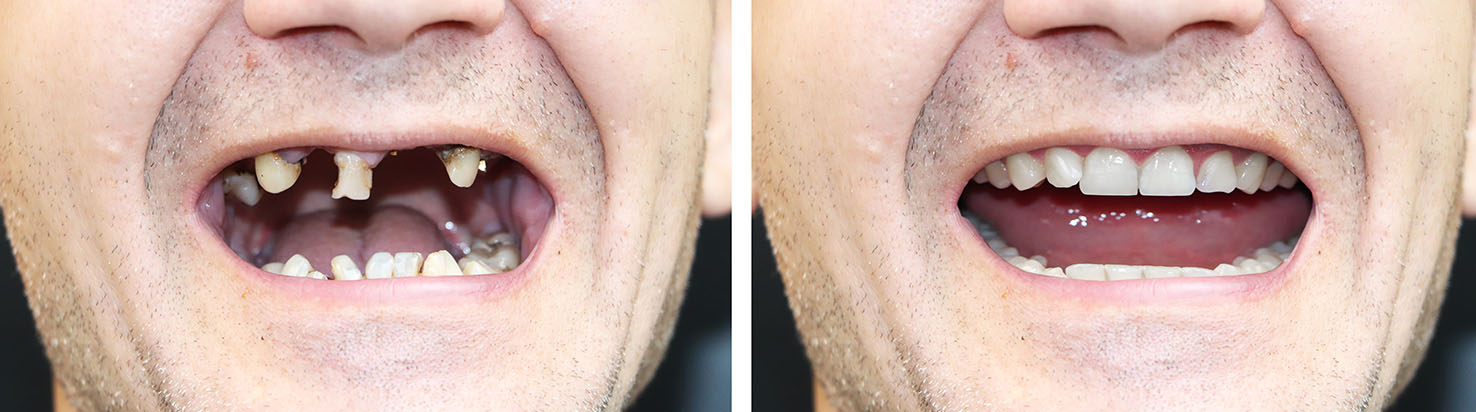
Candidacy for implants depends on several factors including general health, oral hygiene, and the quality and quantity of jawbone. A careful evaluation—covering medical history, dental examination, and imaging—helps determine the best path forward. Where bone is insufficient, grafting or other preparatory measures can be used to create a stable foundation for implant placement.
Implant care begins with a comprehensive treatment plan and precise surgical placement. The procedure is typically performed on an outpatient basis using local anesthesia and, when appropriate, sedation options to enhance comfort. After placement, a period of healing allows the implant to integrate with the bone; once integration is confirmed, the final prosthesis is designed and attached.
Bone grafting is a predictable technique used when the jaw lacks the volume needed to support an implant. Grafts can be placed at the time of tooth extraction or as a preparatory treatment before implant surgery. These procedures aim to rebuild the bone so implants will have the strength and support required for long-term success.
Reliable outcomes depend on thoughtful planning, careful surgical technique, and consistent follow-up. We use modern imaging and restorative materials to plan implant placement and design prostheses that integrate well with your smile. Routine dental care, good home hygiene, and regular check-ups are key to maintaining implant health and the tissues around them.
City Smiles Dental provides personalized implant care in a comfortable setting, focusing on conservative, evidence-based approaches that prioritize your oral health and overall wellbeing.
If you’d like to learn more about implant dentistry or discuss whether implants are a good option for your smile, please contact us for more information.

Dental implants are biocompatible posts, typically made from titanium or titanium alloy, that replace the root portion of a missing tooth and act as a foundation for a prosthetic crown, bridge or denture. The implant is surgically placed into the jawbone where it serves as a stable anchor for the visible restoration. Because the implant integrates with bone through a process called osseointegration, it provides support that closely resembles a natural tooth.
After the implant fuses with the bone, a custom-made prosthetic is attached to match the color, shape and size of surrounding teeth. This combination of implant plus restoration restores chewing function, helps preserve surrounding teeth and contributes to a natural appearance. Long-term success depends on careful planning, precise placement and ongoing oral hygiene to protect the tissues around the implant.
Candidacy for implants is determined by a combination of general health, oral health and the amount of available jawbone. Patients should have reasonably healthy gums and be able to undergo a minor outpatient surgical procedure, and conditions such as uncontrolled diabetes or certain medical therapies may require coordination with a physician. A thorough clinical exam and imaging study help identify whether implants are a predictable option.
If jawbone volume is limited, procedures such as bone grafting or ridge augmentation can often create a suitable foundation for implant placement. Other factors like smoking, oral hygiene habits and realistic expectations also influence candidacy and long-term outcomes. Your dentist will review alternatives if implants are not recommended and explain the steps needed to become a candidate when possible.
Timelines vary depending on the case, but the implant process typically includes an initial consultation and imaging, surgical placement of the implant, a healing period for osseointegration and final restoration with a crown, bridge or denture. The healing period that allows the implant to fuse with bone most commonly ranges from a few months to several months, depending on bone quality and whether grafting was performed. Complex cases or staged treatments may require additional appointments for grafting or temporary restorations.
In some situations, immediate-placement or immediate-load protocols can shorten the visible restoration timeline by placing a temporary tooth the same day as surgery, but these approaches are case-specific and require careful planning. Factors that influence the overall duration include the number of implants, the need for preparatory procedures and individual healing rates. Your dental team will provide a personalized timeline after the diagnostic visit and explain each phase of treatment.
Implant surgery is generally performed on an outpatient basis using local anesthesia and, when appropriate, sedation to keep you comfortable throughout the procedure. The surgeon places the implant into the prepared site in the jawbone, and the soft tissues are closed to allow healing; the length of the procedure depends on how many implants are placed and whether additional procedures are performed. Most patients experience mild to moderate soreness, swelling and minor bleeding that can be managed with medication and home care instructions.
Initial soft-tissue healing typically occurs within one to two weeks, while full osseointegration takes longer and is monitored over subsequent months. During recovery it is important to follow post-operative directions such as avoiding strenuous activity, eating soft foods and maintaining gentle oral hygiene around the surgical site. Regular follow-up visits allow the clinician to check healing and plan for the restorative phase once the implant is stable.
Long-term care for implants centers on excellent daily oral hygiene and routine professional maintenance to protect the surrounding gum and bone tissue. Brush thoroughly at least twice a day and use floss or interdental brushes to clean around the implant restoration and between teeth, taking care to reach the gumline where plaque can accumulate. Because implants are not immune to inflammation around the tissues, preventing plaque buildup is essential to avoid peri-implant mucositis or peri-implantitis.
Schedule regular dental checkups and professional cleanings so your clinician can monitor the implant, the restoration and the health of adjacent tissues. Avoid habits that place excessive force on the restoration, such as chewing very hard objects or chronic clenching, and report any signs of looseness, persistent soreness or bleeding around the implant promptly. With consistent home care and professional oversight, implants can remain stable and functional for many years.
Common implant restorations include single crowns for individual missing teeth, implant-supported bridges for several adjacent missing teeth, fixed full-arch restorations for replacing all teeth in an arch and implant-retained overdentures for a removable option with improved stability. Each restoration type addresses different clinical needs: single crowns preserve neighboring teeth, bridges and full-arch solutions restore continuous function, and overdentures combine the security of implants with the convenience of removable cleaning. The choice depends on the number and position of missing teeth, bone availability and the patient’s functional goals.
Your dental team will evaluate your oral condition, prosthetic expectations and lifestyle to recommend the most appropriate restoration. Factors such as esthetic demands, hygiene access and long-term maintenance considerations help determine the final plan. A personalized consultation and diagnostic imaging are essential to match the restoration type to your anatomy and treatment objectives.
Properly placed and restored implants are designed to restore normal chewing function and allow you to eat a wide variety of foods with confidence. Because implants are anchored in bone, they eliminate the slipping and instability common with some removable dentures, which in turn supports clear speech and comfortable mastication. Most patients regain a near‑normal bite force and find that speaking and eating become more natural once healing and final restoration are complete.
There can be a short adjustment period as your mouth adapts to the new restoration, especially if you previously used removable dentures. Simple exercises like practicing speaking and starting with softer foods during the transition can help. If you experience persistent difficulty with speech or chewing after the restorative phase, your dentist can evaluate occlusion and the prosthesis for refinements.
Bone grafting is a surgical procedure used to rebuild or augment jawbone when there is insufficient volume or quality to support an implant. Grafts may be placed at the time of tooth extraction, as a preparatory procedure before implant placement, or simultaneously with implant placement when conditions allow. Materials for grafting include autograft, allograft, xenograft or synthetic substitutes, and the choice depends on the clinical situation and desired healing characteristics.
Healing after grafting requires time for the graft material to integrate with the native bone, and the timeline before implant placement varies according to the size and type of graft. When successful, grafting provides the support needed for reliable implant integration and long-term function. Your clinician will explain the recommended grafting approach, associated healing times and how grafting contributes to predictable implant outcomes.
Modern implant planning commonly relies on three-dimensional imaging such as cone beam computed tomography (CBCT), digital impressions and computer-aided treatment planning to assess bone anatomy, nerve positions and ideal implant angulation. These tools enable the clinician to visualize the surgical site in detail, simulate implant placement and design precise surgical guides that translate the plan into accurate intraoperative results. Digital workflows also support custom prosthetic design so the final restoration aligns with esthetic and functional goals.
The office of City Smiles Dental uses state-of-the-art imaging and digital scanning to improve predictability and reduce surgical surprises. By combining clinical examination with advanced diagnostics, the treatment team can present a clear, individualized plan and explain each step of the process. Accurate planning reduces complications and helps achieve a restoration that fits comfortably and looks natural.
City Smiles Dental emphasizes comprehensive care that begins with a detailed evaluation, evidence-based treatment planning and the use of modern imaging and restorative materials. Experienced clinicians coordinate surgical and prosthetic phases, monitor healing, and adjust the plan as needed to match the patient’s anatomy and goals. Patient education about home care, maintenance and lifestyle factors is an integral part of preparing for and supporting long-term success.
After restoration, ongoing follow-up appointments and routine cleanings allow the dental team to monitor implant health and intervene early if issues arise. A collaborative approach between the patient and the practice—focused on meticulous hygiene, timely professional care and regular assessment—helps maintain implant stability and preserve surrounding tissues over time. This proactive model of care supports predictable, durable results for implant patients.